Generally known as the MoD site at Cowden, on the coastal edge of the East Riding of Yorkshire, the area was requisitioned in 1940 by the military as a training range for tank crews. The takeover of land meant removal of Great Cowden, a hamlet affected by coastal erosion (see Great Colden).
After the Second World War the site lay abandoned until 1953 when the War Office developed it as an air gunnery and bombing range for the Royal Air Force. At a little over 600 acres and with a cliff line of 2.26 kilometres, RAF Cowden was in use until 1998.
An original item of installation was the gunnery range shelter. A number of these structures were placed along the coastal side.
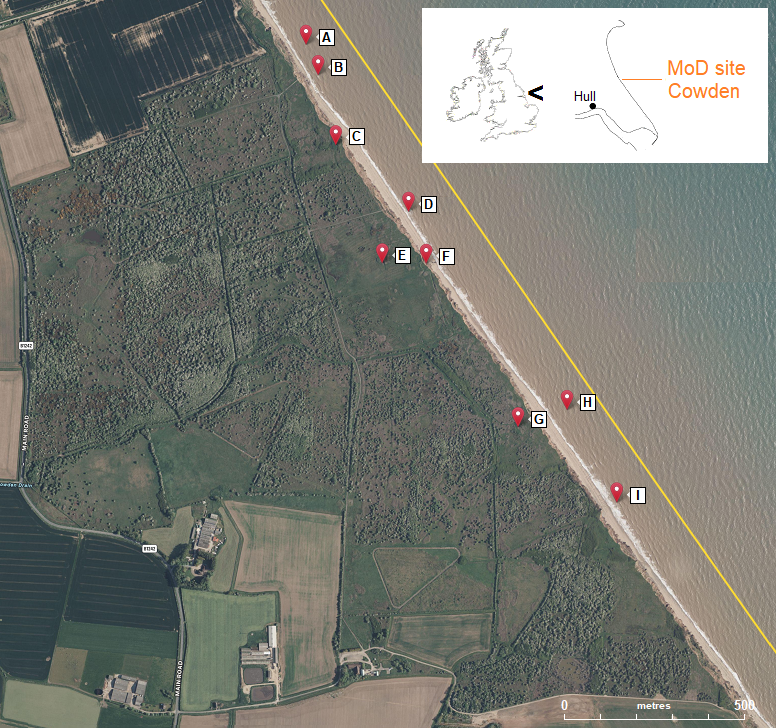
Aerial imagery of the MoD site, Cowden, summer 2020. Pins show locations of range shelters or remnants. The amber line marks the approximate cliff position in the early 1940s, when military operations began.
Only two shelters remain on land, with a known seven having succumbed to local cliff recession, which averages some two metres per year (online calculator).
Design, dimensions, and original orientation vary. On at least some of the examples the outer face is stretcher bond brickwork while the inner lining is concrete. When descended to the beach, it is possible that prolonged pounding by waves may cause brickwork to become detached and subsequently lost. A protective concrete cover above the viewing slot is soon removed, too.
Presented below is a gallery of what may be seen today. Coordinates are those last recorded. Use Grid Reference Finder to locate and convert.
A
TA 23842 42182. Coordinates when on land not known.
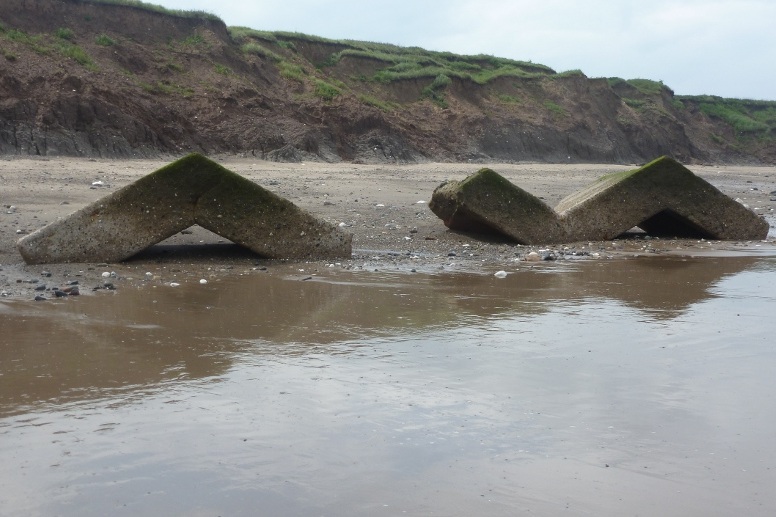
These pieces have been referred to as ‘beach art’ [10 June 2012].
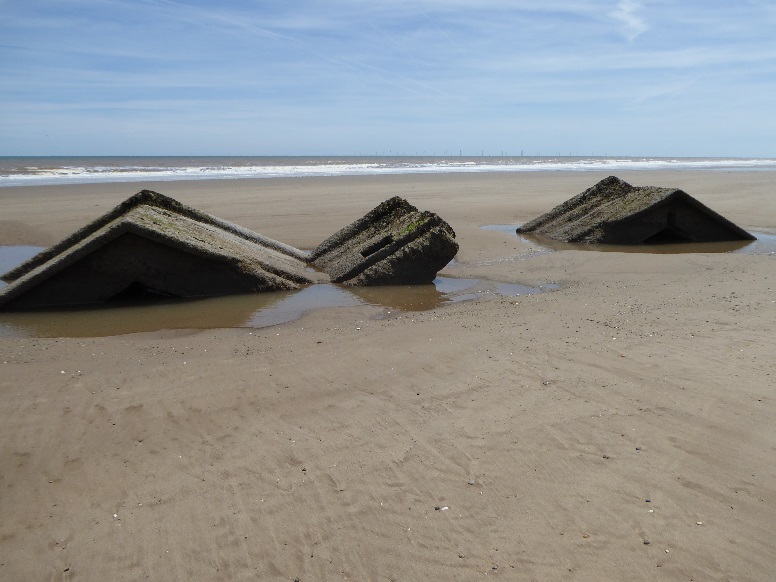
At the centre of the picture a recess in the wall section is for a viewing slot and identifies the forward part of the shelter. The former base of the structure is to seaward. Before breaking away, the piece at picture right would mirror the configuration on the left. Nearest the camera, a groove to support a cover above the recess can be seen on both pieces [15 June 2015].
B
TA 23872 42103. Coordinates when on land not known. One of two shelters given an RCZAS reference, MA73.
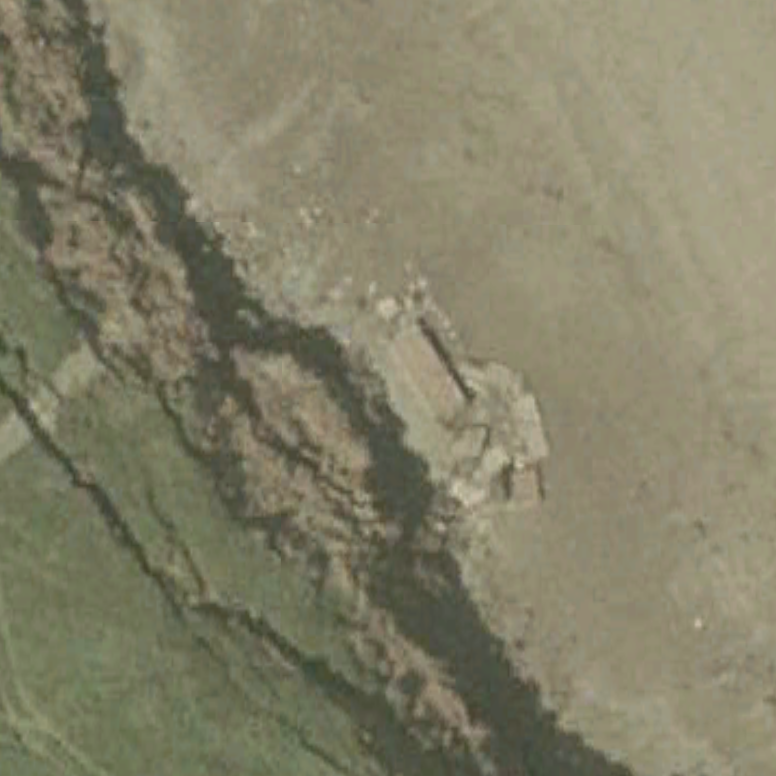
Shelter B having recently descended to the beach [Google Earth historic imagery, 2003]. The image appears to show a brick face to the structure, a feature confirmed in the RCZAS survey, 2009/2010.
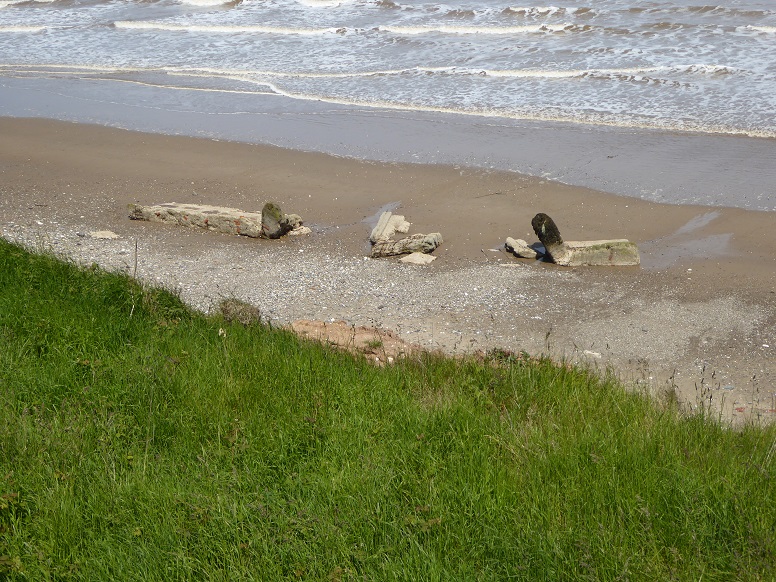
From the cliff top [15 June 2015].
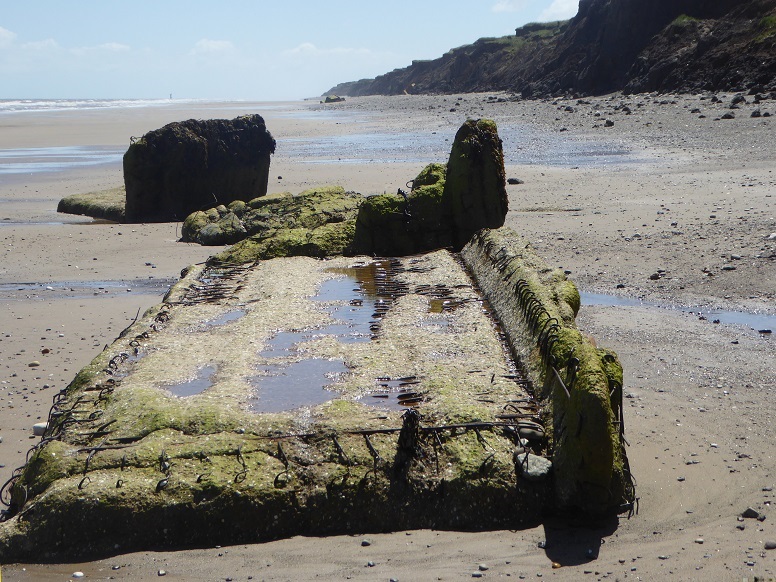
Aligned with shelter D in the distance. Shelter F, not fully on the beach, is to the right of D [12 July 2017].
C
TA 23934 41901 when on land.
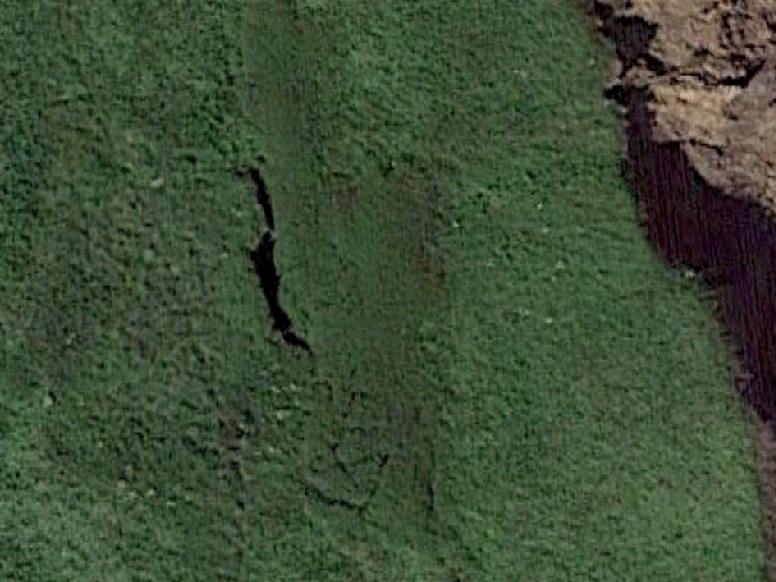
A growth of vegetation conceals parts of this shelter in even the better historical aerial imagery [Google Earth, 18 June 2017].
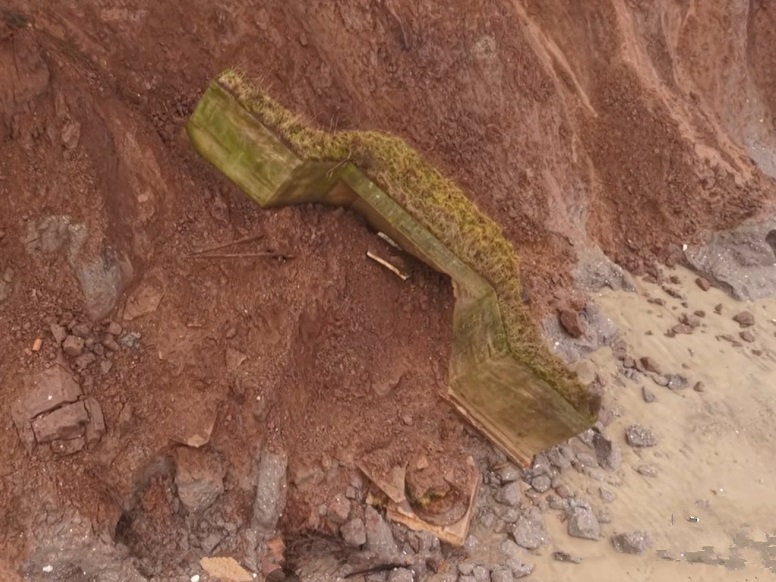
Perched at the cliff edge in Google Earth 23 April 2025, alignment shifted during descent [Timothy's Travels: 1 February 2026].
D
TA 24141 41721. RCZAS reference, MA74.
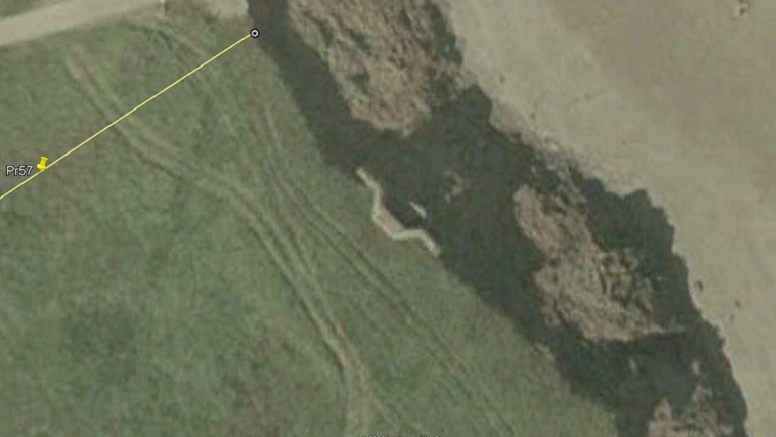
At the cliff line, coordinates TA 24131 41706. The pin and line indicate a cliff loss monitoring profile [Google Earth historical imagery 2003].
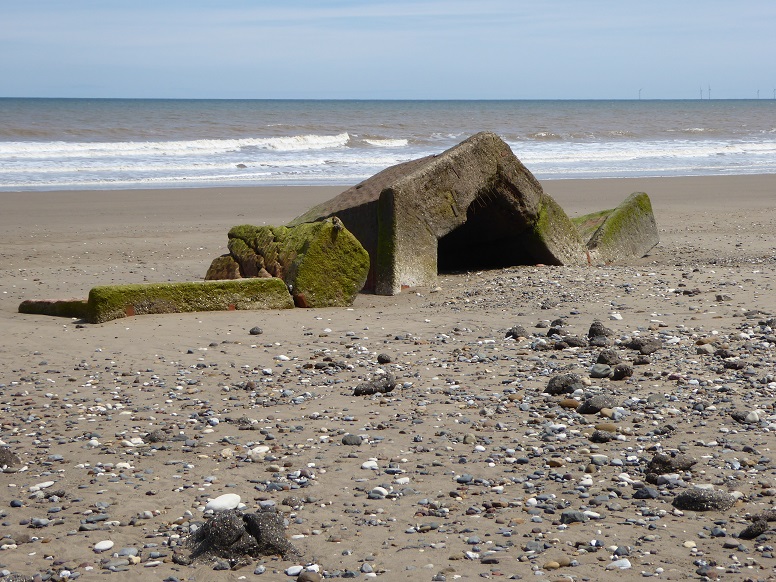
Shelter D resembles shelter A in design [15 June 2015].
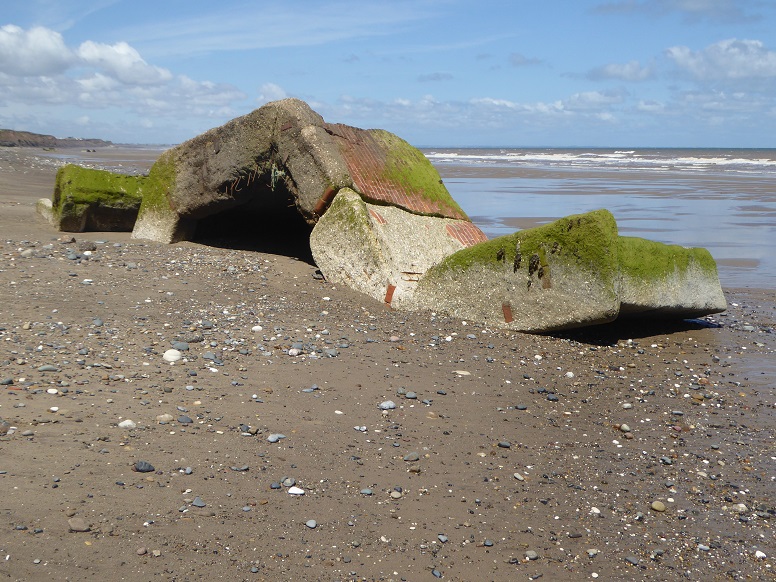
The base is towards the camera [12 July 2017].
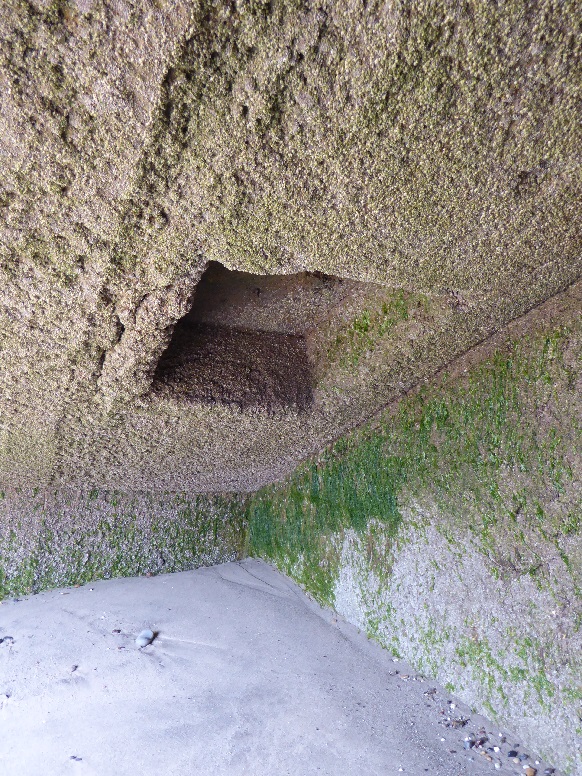
A view inside, looking up. The recess contains the viewing slot, which can be partly seen. At picture right is the cover [15 June 2015].
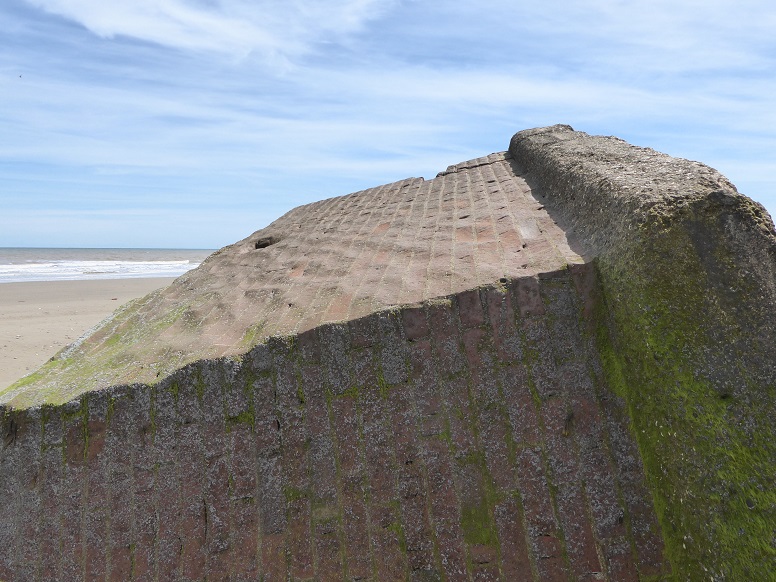
Brickwork. Note the viewing slot [15 June 2015].
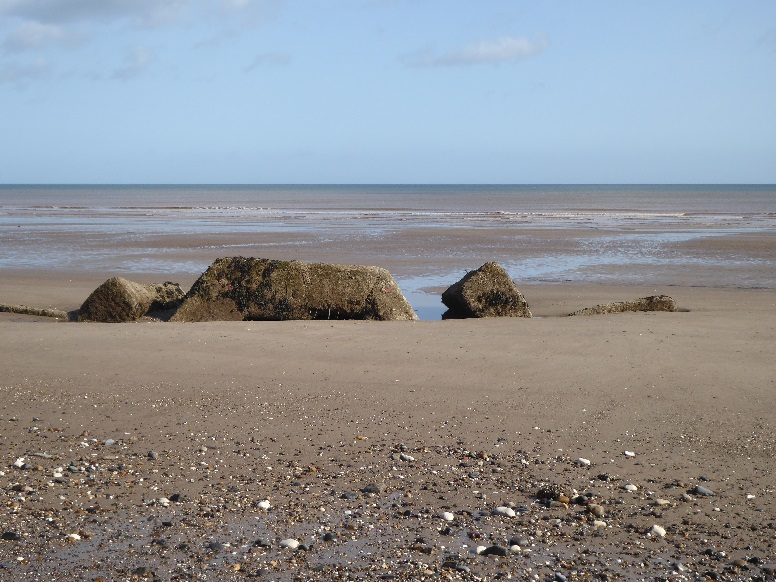
The parts have become detached [29 September 2023].
E
TA 24072 41576. One of only two shelters still on land, shelter E rested about 88 metres from the cliff line in April 2025.
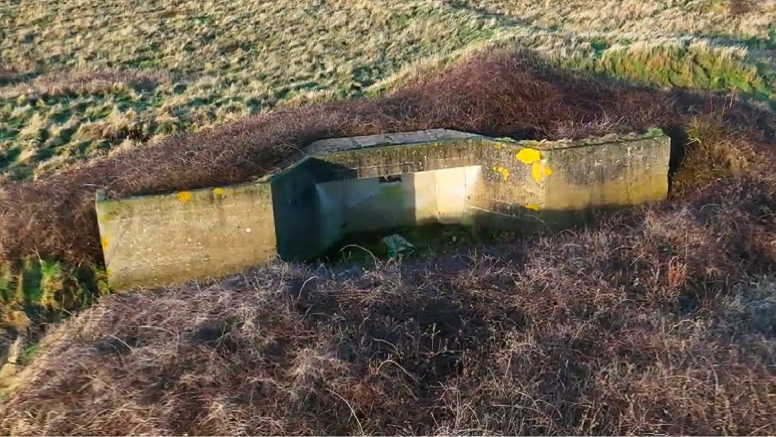
The viewing recess is visible in this drone image [Timothy’s Travels, 13 February 2024].
F
TA 24193 41578 when on land.
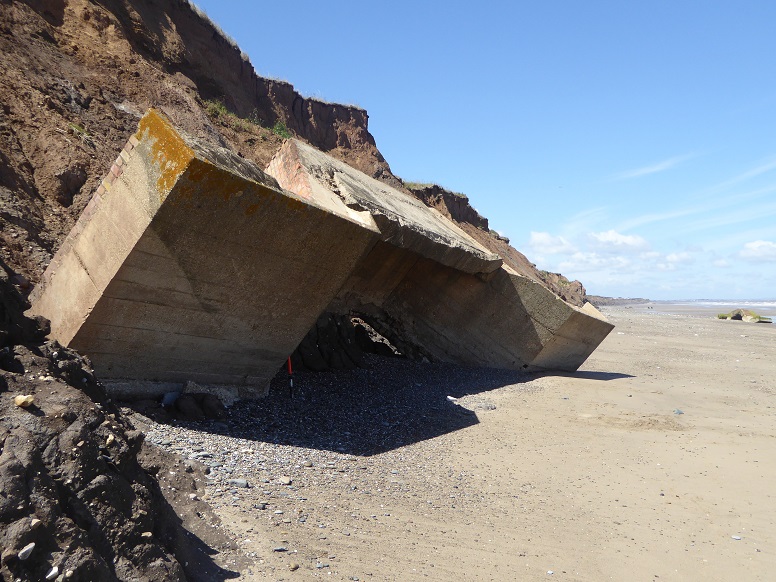
Descended but not fully on the beach. Shelter D in middle distance [12 July 2017].
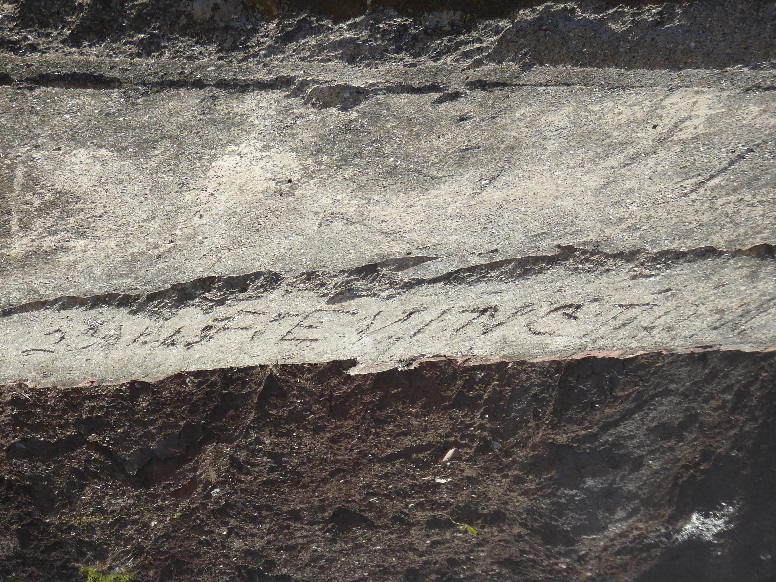
Construction can be 3 March 2026d. The inscription reads:
23 1 43 F. EVINGTON
[12 July 2017].
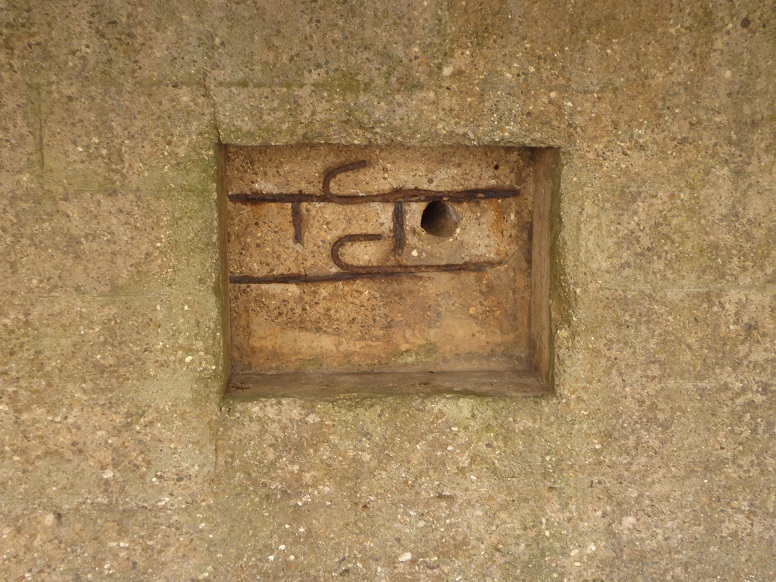
Viewing recess and slot [12 July 2017].
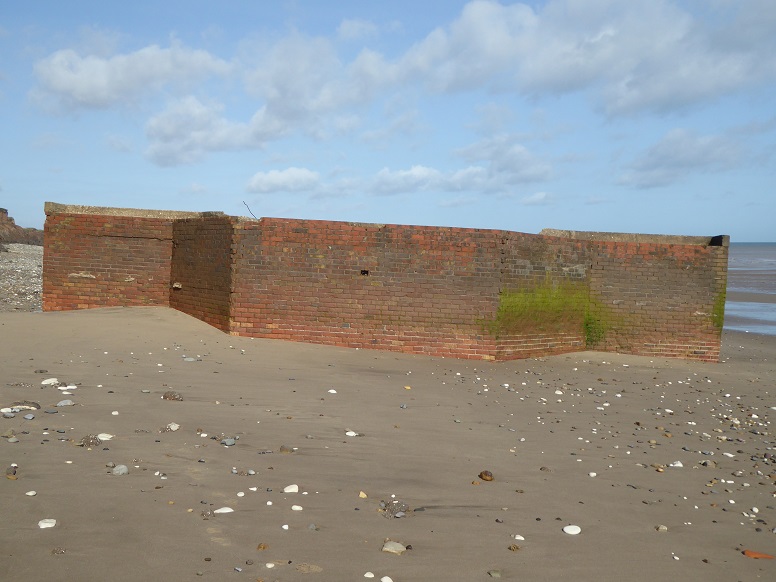
The shelter has been reorientated and shifted by tides as if to present a wall across the upper beach [29 September 2023].
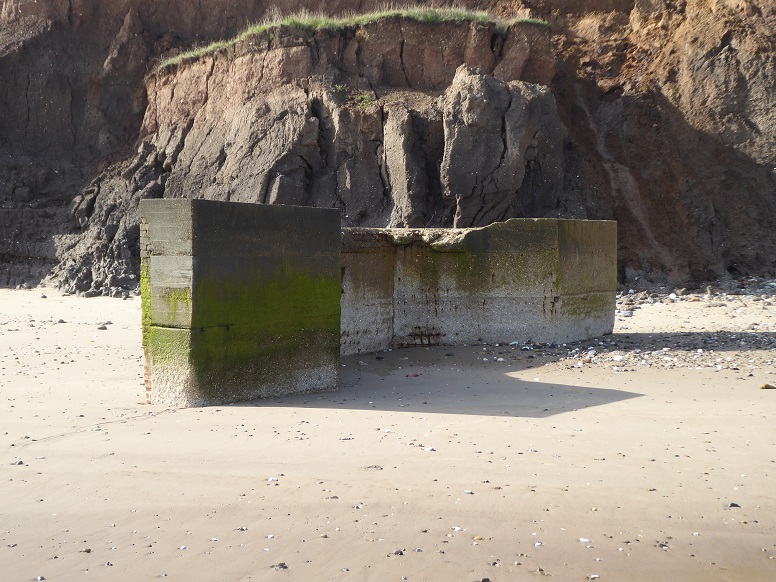
Much of the overhead cover has gone [29 September 2023].
G
TA 24465 41124. Shelter G is one of only two of the structures remaining in situ, the other being shelter E. Aerial imagery tends to be rather poor and the site itself is a restricted area.
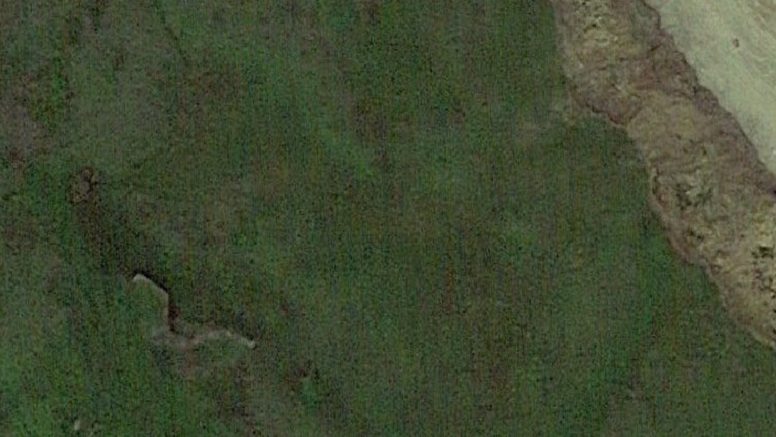
In this picture, the cliff line is approximately 46 metres away [Google Earth historical imagery: 29 September 2021].
H
TA 2460( ) 4118( ). Coordinates for this most seaward placement of all the shelters are from Historic England Research Records. Unconfirmed remnants can be found at TA 24618 41182, at the lower beach, though exposure is usually very limited.
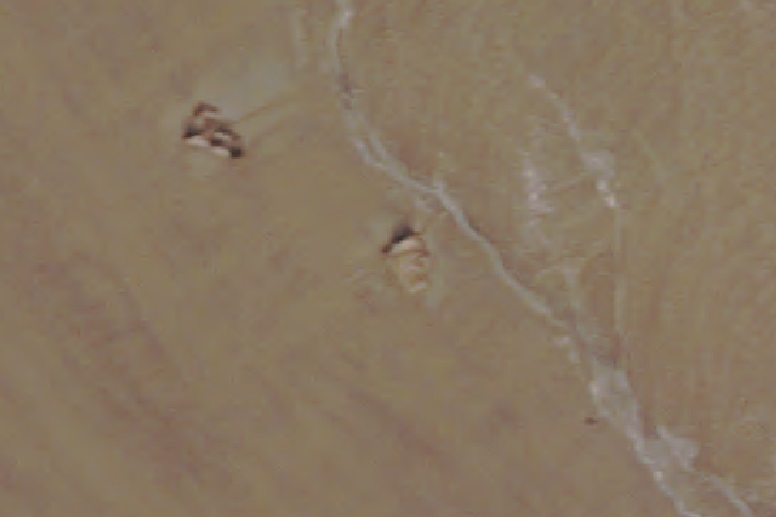
This is perhaps the only aerial image available to show any semblance of detail [Channel Coastal Observatory: 2018].
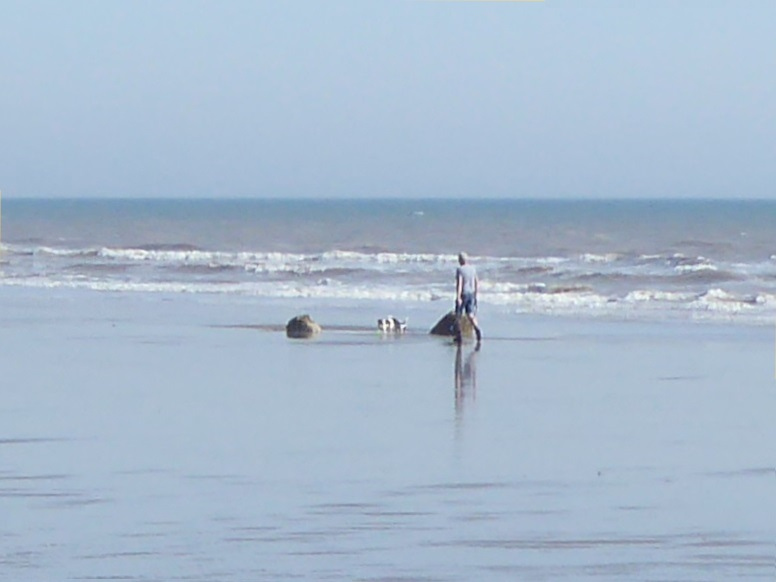
Little to see [31 July 2020].
I
TA 24747 40928. Coordinates when on land not known.
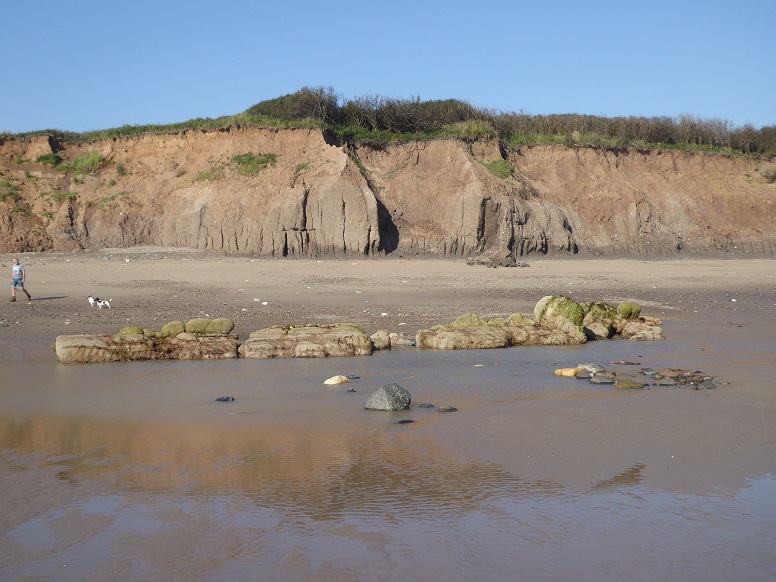
Shelter I is seen lying about 22 metres from the cliff foot in Google Earth historical imagery 2003. Here, it is more than double the distance [31 July 2020].
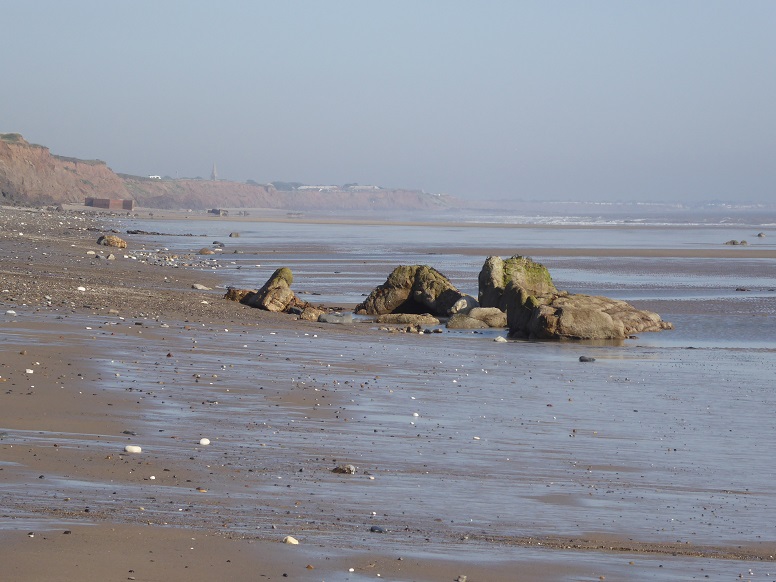
From a different direction the sense of length may be lost but angularity of pieces is apparent. The visual field of the picture actually includes all shelters not on land [31 July 2020].
top
Page prepared by Brian Williams in February and March 2026.